Compassionate Curiosity
Consider your bedside manner when it comes to self-examination


Socrates offered timeless wisdom: The unexamined life is not worth living. Perhaps he would modify it today to reflect that an unexamined life will be lived regardless; it will just be a lot harder than it has to be.
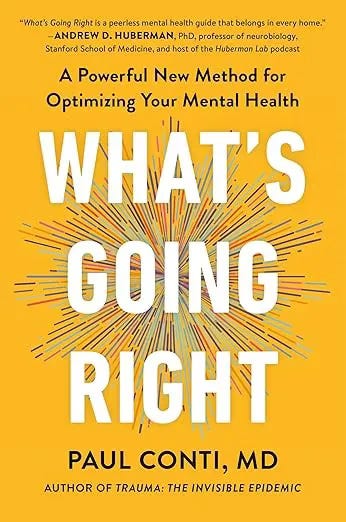
Dr. Paul Conti, author of What’s Going Right, has a fresh, contemporary invitation about self-examination. He offers that we should come at our self-reflection with compassionate curiosity. In other words, have a good bedside manner as you attend to your mental and emotional health.
We are at a very important crossroads right now where we are recognizing that our mental and emotional health are as integral to a rewarding life as good physical health. While in the past, we rarely gave our mental and emotional health a second thought, today we coming into the awareness that both drive the degrees of satisfaction we experience in our lives. Regular self-examination check-ups and check-ins will become as commonplace as daily exercise and annual health exams. We are already well on the road to this pivotal change.
As Dr. Conti points out — we have come to the realization that keeping the hood of what is really driving us clean and shiny, is not enough. We have to pop the hood and investigate what is really going on inside that head of ours. Socrates was really on to something radically important - and it has stood the test of time: Get into the practice of meaningful self-examination.
Recent scientific breakthroughs coupled with decades of deep personal research has not only removed the stigma of mental and emotional health, it has revealed that the secret to a life well lived is caring for both, with intention, self-awareness and a good bedside manner.
Dr. Conti personifies what compassionate curiosity looks and feels like. He is soft-spoken and has an airy lightness about him. You would expect that someone so steeped in heady research would talk way over our pay grade when it comes to assessing our mental and emotional health. Just the opposite is true. By nature, he distills his life’s work into irresistible bite-sized nuggets we want to ingest.
He knows that for decades, we painted a rather dismal picture of self-examination. No one really wanted to look at their mental and emotional health any more than a kid wants to look at his throbbing knee after a fall from his bike on a gravel road. We are so scared what we might see. We aren’t prepared to deal with the inevitable mess.
So much of our language around mental and emotional health only amplified the perceived fears we had about really examining our thoughts, behavioral patterns, habits and emotions.
But just like that injured knee, if we don’t look at it, examine it carefully and attend to it, things will only fester. In the long run, we won’t be better off.
We are moving away from ignoring mental and emotional health to proactively caring for it. After all, they are both key drivers of a life well lived, one that we play a very active role in creating and enjoying.
Just imagine for a moment what it might look and feel like for all of us if there was a huge cultural shift; one where we’d envision compassionate caregivers with a kind-hearted bedside manner nursing us back to robust, flourishing mental and emotional health.
Sounds so lovely, doesn’t it?
Imagine a world where compassionate curiosity is much more prevalent than harsh judgement. Imagine it becoming commonplace to inquire with tenderness about how someone is feeling and experiencing in any given moment. Listening to understand, validating, offering compassion and empathy. Working in harmony to attend to each other’s mental and emotional health just as we would a skinned knee or stubbed toe.
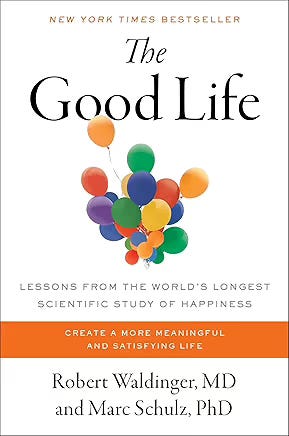
We should not be surprised that we are arriving at this crossroads. After all, Harvard’s 80+ year study on happiness has unearthed the truth that our relationships are the secret to a good life. In the book, The Good Life, Drs. Robert Waldinger and Marc Schulz, reveal that the participants gained meaningful self-knowledge through the bi-annual reviews conducted by Harvard researchers over the entire span of their lives.
By design, the Harvard study was guiding these participants into a regular committed practice of self-examination. What was working well, what was not. What they were learning about themselves from their closest relationships. What their regrets revealed to them about what mattered most. How were they showing up in their lives. Was there a disconnect between who they wished they were and who they really were? What limiting beliefs did they discover and what hidden potential did they unearth? Did they have to keep learning some of life’s most valuable lessons repeatedly? Were they able to build capacity and have a healthy reservoir to handle life’s challenges and adversities? What were their richest memories?
Since the dawn of time, ancient philosophers have contemplated the meaning of life and how to get the most out of the life we are given. Socrates had a strong inkling that self-examination was essential. He was so right.
Dr. Paul Conti is standing right there at the crossroads with us, a warm smile on his face and maybe even a few lollipops tucked in his coat pocket. He would urge us to stop being so hard on ourselves. That harsh inner critic and his or her satchel of stigma, limiting beliefs and negativity bias, are not good travel companions.
“Let’s have a look,” Dr. Conti would say as he gently pops the hood on our engine and peers inside. “Nothing to fear here! Let’s simply examine what is going on with some compassionate curiosity.”
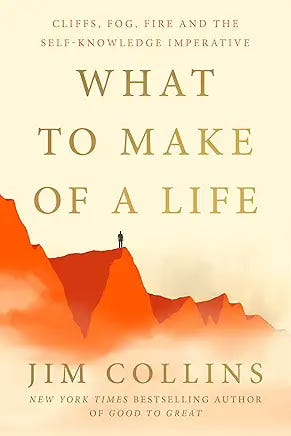
You know who else is at waiting at this exciting crossroads? Jim Collins, author of What to Make of a Life. He has a personal notebook he calls his “bug book”. He’s been taking field notes about how he shows up in life since his early twenties. He’d be happy to have you peek over his shoulder and see what he discovered about himself along the way.
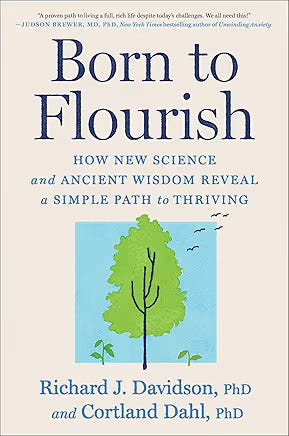
And then there is Dr. Ritchie Davidson with his book Born to Flourish, who would gladly offer to you that daily short walks in nature, alone with your thoughts without judgment or rumination would do you a world of good.
Drs. Waldinger and Schulz would invite you to a fireside chat where they would share remarkable real life stories about ordinary folks who came to look forward to their bi-annual visits with compassionate, inquisitive Harvard researchers who genuinely cared about how their lives were going and what was bringing them the most happiness and satisfaction. While it could have seemed clinical and forced, it was the polar opposite. It revealed that self-examination is essential for course correction when it comes to that big question: What to make of our lives?