Psychological Stabilizers
What I learned from a construction crane doing its job on shaky ground

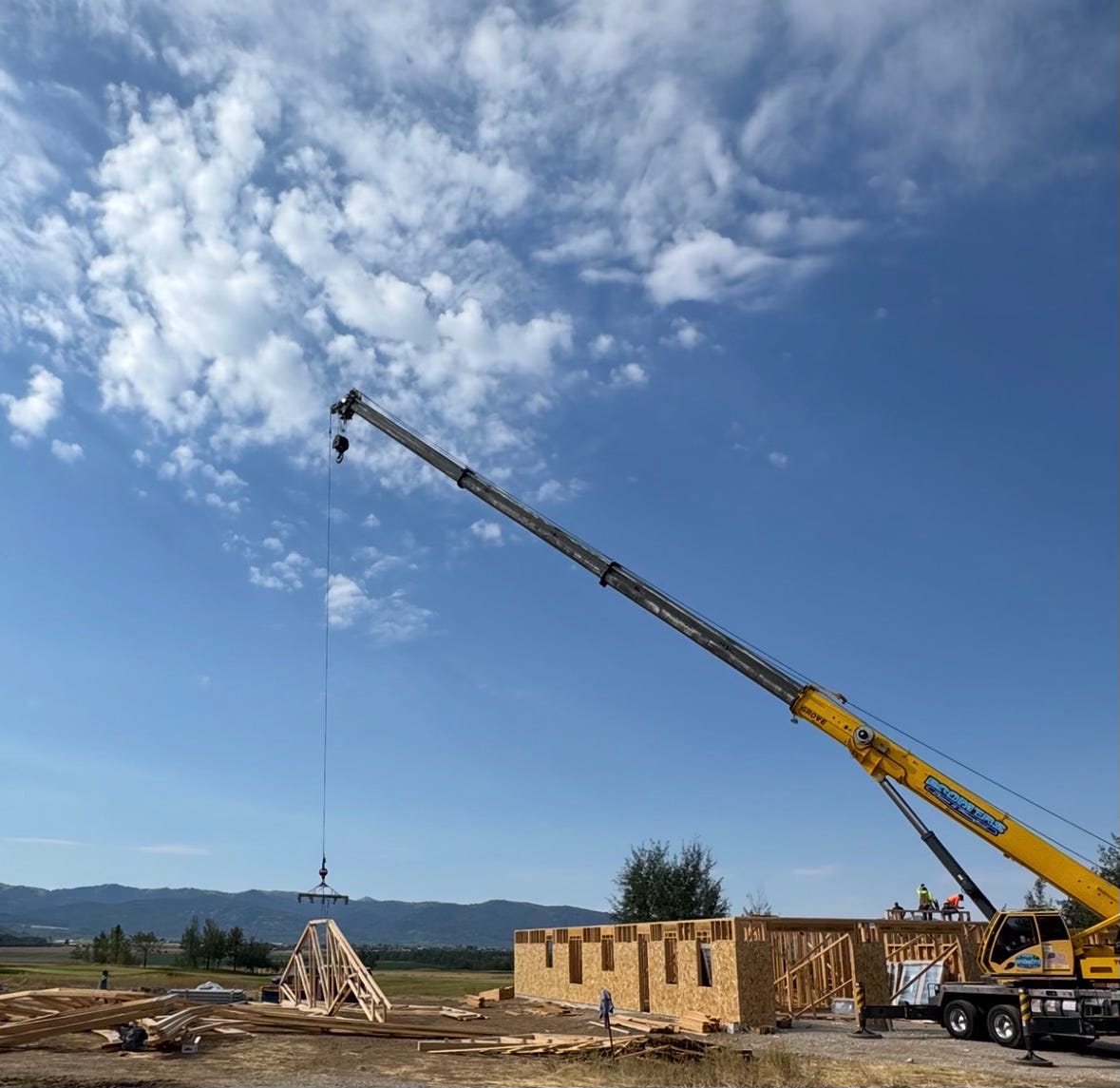
I stared at the giant crane leaning and listing on that job site. It was not resting on that deeply rutted earth - it was trembling, unsure, unsteady. That crane had a big job to do but it was not on solid ground.
And then, the crane operator pressed a few buttons and I watched as four strong legs outstretched from the frame, with a little flexibility built into the joints - and stabilized that massive piece of machinery on all that uneven rocky ground.
The crane seemed to sigh as it came to rest on those dependable stabilizers and fell into place, at the ready now to do its big job.
On my walk back home, I began to smile at the power of a metaphor. When I found myself on shaky ground, could I press a few buttons and stabilize myself to meet the moment, grounded and confident?
I do have a few tools at my disposal when my buttons are pushed or I find myself on shaky ground. But it dawned on me that pairing them up might actually provide greater stability. Just like that heavy duty crane, I can reliably meet the challenges of life by counting on my stabilizers.
The Balancing Act: I learned this one from a yoga instructor more than 20 years ago. I plant my feet firmly on the ground and imagine a strong, flexible root system stretching out and down from my feet. I am firmly planted. This mental image is a psychological shifter. It reminds me I have agency and can act in alignment with what matters most to me. I am both steady and agile.
The Pause: I remind myself to “tap the brakes”. Slow everything down. I want to think before I act — and make an informed, intentional choice. A big deep breath and a very long exhale is that now automatic reflex of tapping the brakes.
Shifting Gears: This may be one of my newer favorite power moves. Just like I shift to manual transmission and a lower gear in my car on a steep grade, I do the same psychologically. I shift from autopilot to manual. In my mind, I envision how easily and reflexively I do this in my car. Now I shift from my default nervous system (fight, flight, freeze) into my parasympathetic nervous system (tend and befriend; the higher power of executive function; logic, reasoning, self-control).
Math Facts: I do a quick value calculation. What matters in the long run and how can I respond that gives me the best return on my investment of time and energy? I’ll be honest - this is the one that requires me to linger longer and consider the aftermath. Yet the more I put it into practice, and do that long division, the more clearly I see how I used to solve for my discomfort in the short term.
These are my “go-to” stabilizers when I am on shaky ground or when I am called to duty without a moment’s notice. How I show up for myself and for those I love really matters to me. I want to be as reliable and effective as that crane. So, I use my control panel with great intention. I push the buttons and pull the levers that are my stabilizers.
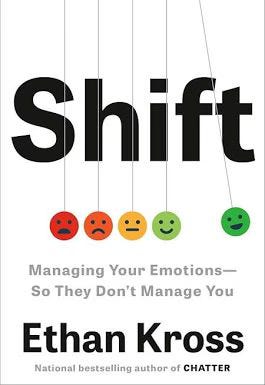
If you want to fashion some stabilizers of your own, check out Ethan Kross’s book Shift: Managing Your Emotions So They Don’t Manage You. Ethan talks a lot about diverse psychological shifts we can proactively use to stabilize our inner emotional landscape and override our automatic driverless settings. HIs book is a very helpful resource for customizing the stabilizers that work best for you.
For me, it is a combo of mental images, metaphors and base knowledge about how my brain and body work. That crane and its stabilizers shifts me quite quickly and puts me on solid ground.